
The search for a pandit in Andheri West usually begins the same way: a possession date received for a flat in Lokhandwala, a shop fitting out in Chakala, a Purnima drawing near and a family that wants the katha done properly. The question beneath the search is simple. Who will arrive on time, follow the shastras, and treat the home with respect?
Acharya Brajesh is a Vedic purohit who performs rituals across Mumbai, and this western suburb is the area he knows street by street. What follows is an area-by-area look at what families here most often book, and an honest account of how the travel and the planning actually work.
What families here commonly book
Different lanes, different needs. In the new towers of Lokhandwala and Four Bungalows, the most requested ceremony is the griha pravesh, the housewarming rite performed when a family first enters a new home — its muhurat and vidhi are described in our complete griha pravesh guide. Along Versova and Yari Road, where older buildings and beach-side flats stand together, the Satyanarayan Katha on Purnima remains a quiet, steady tradition.
Chakala and the MIDC belt are office country. There the common bookings are new-office pujas before the shutters open, shop-opening pujas, and car pujas for vehicles bought in the auspicious seasons. In Saki Naka, homes and workplaces call for the same core ceremonies that mark family life everywhere: namkaran for a newborn, mundan for a toddler, a yearly shraddh for the ancestors, and a rudrabhishek on a sacred day.
- Griha pravesh and vastu shanti for new and renovated flats
- Satyanarayan Katha on Purnima and after wishes fulfilled
- New-office, shop-opening and car pujas in the commercial belts
- Namkaran, mundan and upanayan as children grow
- Rudrabhishek and navagraha shanti on sacred days
Every one of these is performed in the Shankaracharya and Vedic paddhati, at the depth of worship the family's schedule allows.
How the travel actually works
A purohit's day here is planned backwards from the muhurat — the auspicious window — not forwards from his own door. Traffic on the main roads, parking inside tower complexes, the long walk from a basement parking level to the flat: all of it is accounted for before the family ever sees him. He arrives early, arranges the samagri calmly, and begins exactly when the window opens. Festival weeks and Purnimas are sequenced days ahead, so that no family ever waits on another's ceremony.
The muhurat is fixed by the shastras; the journey is the purohit's to manage. Families sometimes apologise for the distance or the hour, and Acharya Brajesh answers with one sentence that has become something of a signature.
Give me the time — distance is my concern. — Acharya Brajesh
What to ask before you book
Ask which paddhati — the ordered method of ritual — the purohit follows, and whether he can explain the choice. Ask whether each step will be explained to the family as it happens, and whether the same puja can be performed in a shorter or longer classical form if your time is fixed. Ask, too, how far in advance a date should be reserved — full-moon days and festival weeks fill first, and an honest purohit will say so plainly. A purohit whose practice is verified against the shastras welcomes these questions; a practice carried by rote alone prefers that no one asks. The answers, given easily and without irritation, are worth more than any advertisement.
The lineage behind the practice
Acharya Brajesh's roots are in the village of Nandhiri, and he was raised in the guru-shishya parampara, the lineage through which ritual knowledge passes from teacher to student. From 2009 to 2011 he lived in the United States, invited as a Vedic Pandit by the Maharishi Mahesh Yogi organisation and based at Maharishi University of Management in Iowa — years that taught him to explain ancient rites in plain language to any audience, anywhere. The full journey is told on the about page. Families here book him again and again for that combination: strict method, patient explanation, and the punctuality the muhurat deserves.
Booking a purohit near you
Whether the occasion is a housewarming in Lokhandwala, a katha in Versova or an office puja in Chakala, you can request an appointment with Acharya Brajesh or call +91 98679 90291. Name the ceremony, the date and the time you have. The vidhi will be fixed to the shastras, the samagri list will reach you in advance, and the travel — as he is fond of saying — is his concern entirely.
Frequently Asked Questions
Do you cover the whole area, including Lokhandwala and Versova?
How early should we book a purohit for a griha pravesh?
Will you bring the puja samagri, or should we arrange it?
Can you reach in time for an early-morning muhurat?
What is the dakshina for a home or office puja?
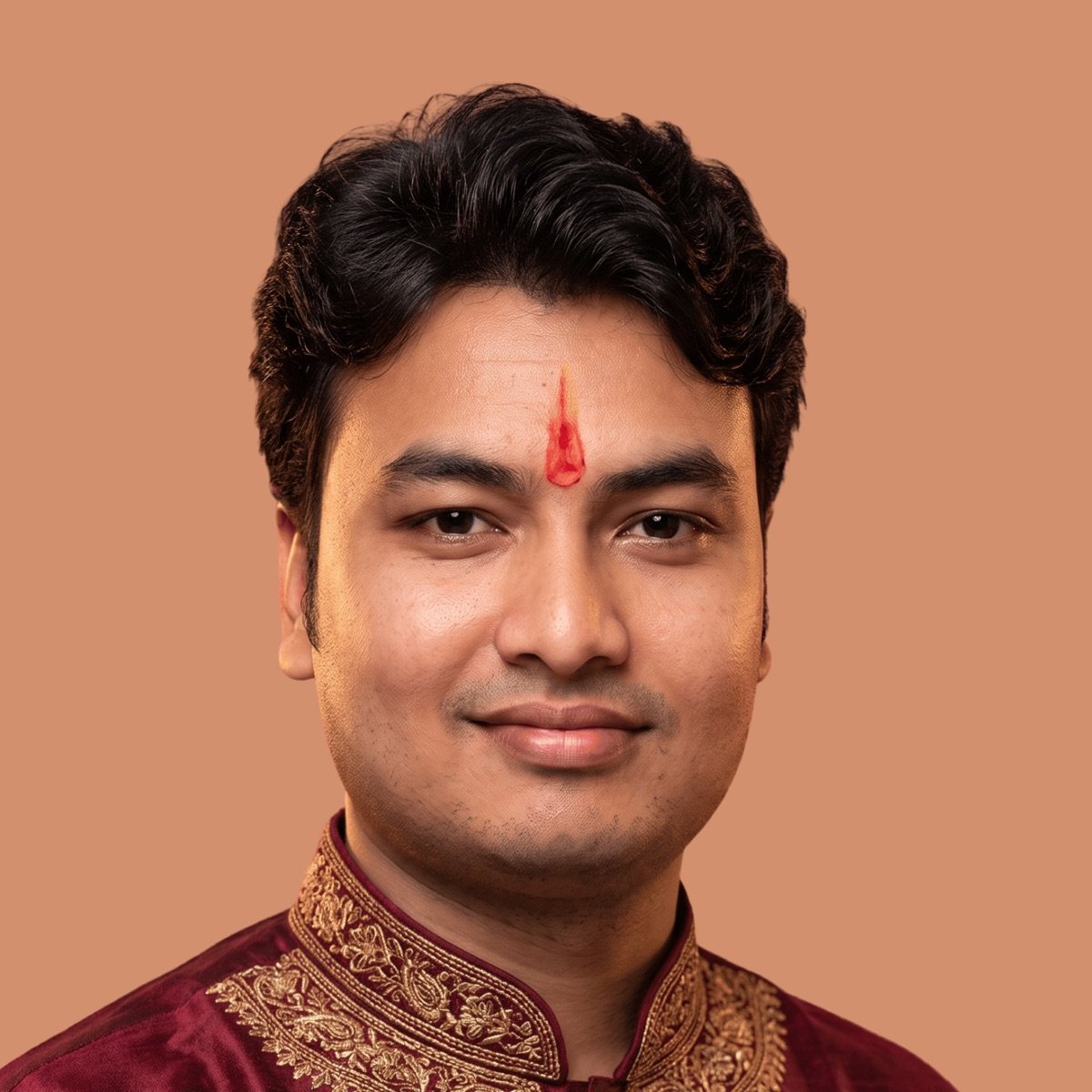
Acharya Brajesh
Vedic Purohit, Andheri, Mumbai. Invited to the USA (2009–11) as a Vedic Pandit by the Maharishi Mahesh Yogi organisation. Every ritual performed per Sanatan Dharma Vedic Darshana — in the Shankaracharya and Vedic paddhati. More about the Acharya →
Have a ceremony in mind?
Describe your requirement, verify your email with a one-time code, and the office will call you to fix the muhurat — anywhere in Mumbai.
Request an Appointment