Ask many families what they follow, and the answer is Hinduism. Ask an elder of the same household, and you may hear an older, wider phrase: Sanatan Dharma. The words appear in prayers, on temple walls, and in everyday conversation, yet their meaning is rarely explained plainly. Here is that plain explanation — what the name means, why the tradition calls itself eternal, and how it shapes the ritual life of an ordinary home.
What the Words Actually Mean
Sanatan is Sanskrit for eternal — without beginning or end. Dharma is harder to compress into one English word. It does not mean religion in the modern sense of membership, clergy, or creed. Dharma means that which upholds: the principles, duties, and right patterns of living that hold a person, a family, and a society together.
Read the two words together, and Sanatan Dharma means the eternal way of upholding. It names principles believed to be as constant as the laws of nature — not a sect founded by one teacher at a fixed point in history.
Why Eternal Describes the Principles, Not Just the Age
Many people assume that eternal is simply a claim about how old the tradition is. The deeper meaning is different. The shastras — the collected scriptures of the tradition — teach that dharma names principles which do not expire with an era: truthfulness, non-harm, gratitude, duty toward parents and teachers, worship, and self-restraint.
Forms change from generation to generation. The lamp on the altar may burn ghee or oil; the prayer may be spoken in Sanskrit, Hindi, Marathi, or English. The principle beneath the form — reverence for the divine woven into ordinary days — is what the tradition calls eternal. That, and not a date on a calendar, is what the name points to.
The Four Aims of Life
Vedic dharma, explained simply, rests on four aims called the purusharthas. Together they give the framework its balance:
- Dharma — right living: duty, ethics, worship, and conduct that uphold oneself and others.
- Artha — livelihood and wealth, earned honestly, which sustains a household.
- Kama — legitimate enjoyment: love, beauty, celebration, and the pleasures of family life.
- Moksha — liberation: the quiet, long-horizon goal of freedom from the cycle of birth and rebirth.
Note that artha and kama are not condemned. Wealth and joy have their rightful place, so long as dharma governs how they are pursued and moksha remains the horizon toward which the whole of life leans.
Not a Sect but a Framework
Because the name points to principles rather than an institution, it holds remarkable diversity under one umbrella. A Shaiva family, a Vaishnava family, and a Smarta family living in the same apartment building may keep different beloved deities and slightly different ritual styles, yet all describe themselves as followers of Sanatan Dharma. There is no single founder to cite, no headquarters to consult, and no founding date to defend. The framework itself is the point.
How It Shows Up in Daily Ritual Life
For a householder, Sanatan Dharma is less a philosophy to be debated and more a rhythm to be kept:
- A lamp lit at the home altar in the morning, with a short prayer before work begins.
- Festival days that punctuate the year — Ganesh Chaturthi, Navratri, Diwali — kept with family and food.
- Milestones marked by ceremony: naming a child, the first hair-cutting, a wedding solemnized before the sacred fire.
- Quiet habits of gratitude: offering food before eating, remembering ancestors on the days the tradition prescribes.
Each act is small on its own. Together they train attention, humility, and thankfulness — which is exactly what dharma is meant to cultivate in a person.
Forms of worship may change from age to age, but dharma itself neither begins nor ends.
— as the shastras remind us
Living the Eternal Way in a Modern City
Nothing in this framework asks a family to withdraw from the world. Households in Andheri, Juhu, and Bandra keep the same eternal way in compact flats and high-rises: a corner reserved for the altar, a purohit who knows the correct vidhi (method), and festivals observed with a full heart even in a busy week. The tradition has always adapted its forms to householder life while guarding the substance underneath.
Where to Begin
If this article raised questions about your own practice — which ceremony fits your family, and how it should properly be done — a conversation with a trained acharya helps more than any article can. Acharya Brajesh performs every ritual strictly per the shastras, in the Shankaracharya and Vedic paddhati (ritual methods), for families across the city. You can request an appointment with Acharya Brajesh, browse the full list of ceremonies on the services page, or read further guides on the blog. To speak with him directly, call +91 98679 90291.
Frequently Asked Questions
What is Sanatan Dharma in simple words?
Why is Sanatan Dharma called eternal?
What are the four aims of life in Sanatan Dharma?
Is Sanatan Dharma the same as Hinduism?
How can a family follow Sanatan Dharma more sincerely at home?
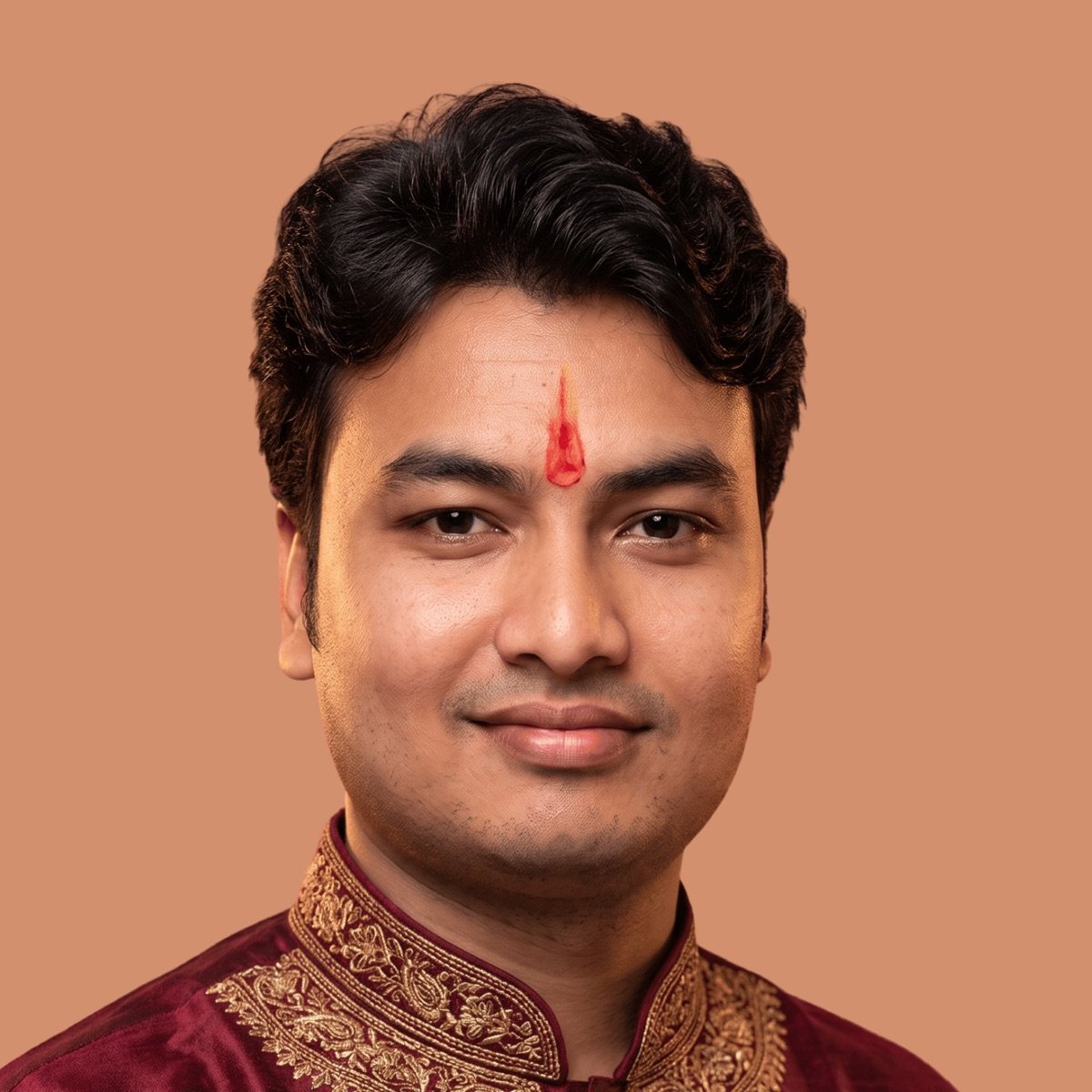
Acharya Brajesh
Vedic Purohit, Andheri, Mumbai. Invited to the USA (2009–11) as a Vedic Pandit by the Maharishi Mahesh Yogi organisation. Every ritual performed per Sanatan Dharma Vedic Darshana — in the Shankaracharya and Vedic paddhati. More about the Acharya →
Have a ceremony in mind?
Describe your requirement, verify your email with a one-time code, and the office will call you to fix the muhurat — anywhere in Mumbai.
Request an Appointment