
Ask three families how long a puja should take and you will hear three answers. The tradition itself gives a precise one: the length follows the number of upacharas — the marks of honour offered to the deity. One puja, one vidhi, honoured at three depths: five offerings in about five minutes, ten in about fifty minutes, and the full sixteen in about five hours. Understanding this structure dissolves both the guilt of the short puja and the suspicion of the long one.
What an upachara is
An upachara is an act of hospitality — the way one would serve an honoured guest: a seat, water, a bath, fresh clothes, fragrance, flowers, incense, light, food. A puja is this welcome, performed with mantra and a steady heart. The number of upacharas decides the depth of the ritual, never its validity. The shastras provide for all three depths, and each is complete at its own level.
Panchopachara: five offerings, about five minutes
Panchopachara puja offers five: gandha, fragrance or sandal paste; pushpa, flowers; dhupa, incense; deepa, the flame; and naivedya, food. In five unhurried minutes the whole arc of worship — honouring, serving, offering — is present. This depth suits a daily practice, a car puja, or a new-office puja in Andheri completed before the working day begins.
Dashopachara: ten offerings, about fifty minutes
Dashopachara extends the five to ten, drawing from the same classical sequence — adding, among others, asana, the seat; padya, water for the feet; arghya, water for the hands; and achamana, the ritual sipping of water. Around fifty minutes gives each upachara its mantra and its quiet. This is the natural depth for a family sankalp — a stated intention offered on behalf of the household — and for most monthly and festival pujas at home.
Shodashopachara: the full sixteen, about five hours
Shodashopachara is the complete worship: asana (seat), svagata (welcome), padya (water for the feet), arghya (water for the hands), achamana (sipping of water), snana (bathing), vastra (cloth), abharana (ornament), gandha (fragrance), pushpa (flowers), dhupa (incense), deepa (flame), naivedya (food), tambula (betel leaf), diparati (the waving of lights) and pradakshina-namaskara (circumambulation and salutation). Each receives its full mantra across roughly five hours. This is the depth of the great anushthans — a sustained, fully elaborated rite — such as a Ganesh Chaturthi sthapana or an annual Rudrabhishek, when a family can give the day.
Why the shastras give three depths
Hospitality scales to the occasion. A guest passing through is offered water and a seat; a guest arriving for a wedding is honoured with the full welcome. The tradition never asks a family to choose between correctness and the demands of life — it gives shorter, complete formats precisely so that worship remains possible inside a working day, and a longer form for when the day can be given entirely. The structure is not a menu of prices but a ladder of hospitality, and the depth is chosen together, respectfully, before the date is fixed.
Choosing the depth that fits
- Office and car pujas: panchopachara honours the occasion inside a working day.
- Family sankalps and home festivals: dashopachara gives a complete experience within an evening.
- The great ceremonies: shodashopachara, when the family can give the day and wants the full sixteen.
The order of the vidhi never changes between the depths; only its elaboration does. A short puja is not a cut puja — it is a complete offering at five upacharas.
The deity does not count the minutes; the deity receives the upacharas offered with a steady heart — as the shastras remind us.
How the puja is planned around your time
Before any ceremony, Acharya Brajesh asks one simple question: how much time can your family give? The vidhi is then planned at the depth that fits — in the Shankaracharya and Vedic paddhati, with nothing essential omitted and nothing theatrical added. A five-minute puja done correctly is not a lesser puja, and a five-hour anushthan is not a performance. Families are often surprised at how calm a five-hour anushthan feels when it has been planned in advance; nothing is rushed, and nothing is padded. The full range of rituals is described on the services page, and the question of timing is explored further in our guide to how long a puja should take.
When you are ready, request an appointment with Acharya Brajesh through the booking page or call +91 98679 90291. Tell him the occasion and the time you have; the puja will be honoured at exactly the depth it deserves.
Frequently Asked Questions
What does upachara mean in a puja?
What are the sixteen upacharas?
Which depth suits a puja at home?
Is a panchopachara puja complete?
How long does shodashopachara puja take?
What is the dakshina for each depth?
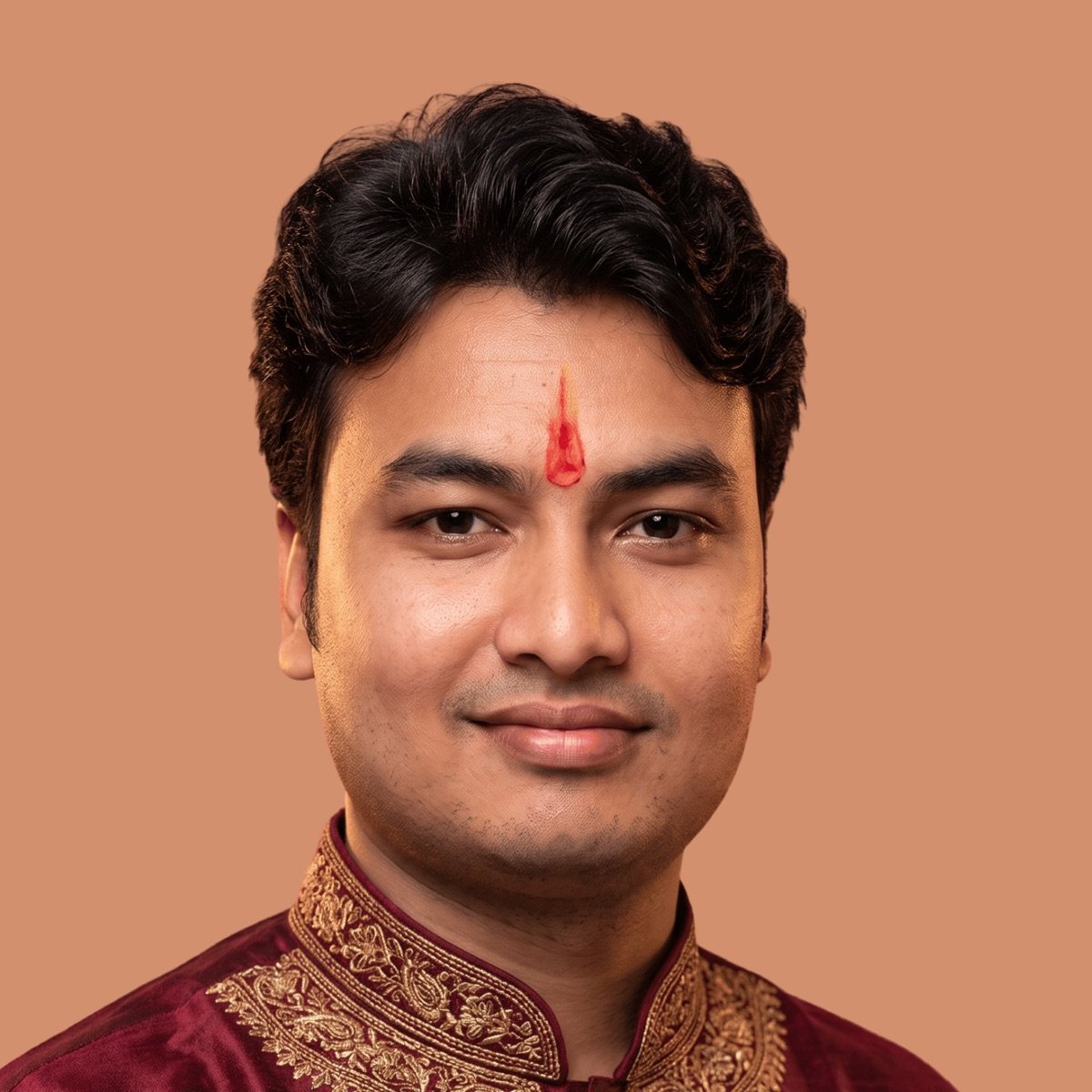
Acharya Brajesh
Vedic Purohit, Andheri, Mumbai. Invited to the USA (2009–11) as a Vedic Pandit by the Maharishi Mahesh Yogi organisation. Every ritual performed per Sanatan Dharma Vedic Darshana — in the Shankaracharya and Vedic paddhati. More about the Acharya →
Have a ceremony in mind?
Describe your requirement, verify your email with a one-time code, and the office will call you to fix the muhurat — anywhere in Mumbai.
Request an Appointment