
Hindu tradition does not treat life as a series of accidents. It maps the journey deliberately, through sixteen ceremonies called sanskaras — a Sanskrit word meaning refining impressions, or sacraments. Each one marks a threshold: before birth, at birth, in childhood, at study, in marriage, and at death. Together they form a map of a life lived consciously.
What a Sanskara Really Is
The word sanskara comes from a Sanskrit root meaning to refine, to perfect. A sanskara is not merely a celebration; it is a sacrament — a moment when a family consciously places a new stage of life before God and asks that it be consecrated. The shastras teach that these rites leave a wholesome imprint on the person they honor, shaping character the way a good habit shapes a day. That is why the ceremonies are treated as sacred duties rather than social events.
The Sixteen Sanskaras, One Line Each
Lists vary slightly by region and text, but the sequence most families follow runs like this:
- Garbhadhana — a rite at conception, praying for a worthy and healthy child.
- Pumsavana — a ceremony in early pregnancy for the wellbeing of the developing child.
- Simantonayana — the ceremonial parting of the hair of the expectant mother, blessing mother and child together.
- Jatakarma — rites performed at birth to welcome the newborn into the family.
- Namakarana — the naming ceremony, traditionally held in the first weeks of life.
- Nishkramana — the first formal outing, when the child is carried out to see the sun and the world.
- Annaprashana — the first feeding of solid food, usually the first grain of rice.
- Chudakarana — the mundan, or first hair-cutting, a gesture of dedication and renewal.
- Karnavedha — the piercing of the ears, performed in early childhood.
- Ritusuddhi — a ceremony marking a young woman's coming of age, kept with honor in many regions.
- Vidyarambha — the beginning of learning, when a child writes the first letters.
- Upanayana — the sacred thread ceremony, which begins formal Vedic study under a teacher.
- Vedarambha — the formal commencement of Vedic recitation after the upanayan.
- Samavartana — the return home at the end of student life, ready for the householder stage.
- Vivaha — marriage, the most elaborate sanskara, solemnized before the sacred fire.
- Antyeshti — the last rites, which return the body to the elements with dignity and prayer.
Notice the arc. The first three sanskaras happen before a child can speak; the middle ones build health, discipline, and learning; the last ones consecrate adulthood and finally entrust the body back to nature. No step in the sequence is optional in spirit, even when a family keeps the rite brief in form.
The Sanskaras Families Request Most
In and around Mumbai, the phone rings most often for a handful of these. Namkaran is booked within days of a birth. Annaprashan and mundan follow in the early years, often as joyful family gatherings. Upanayan is planned carefully, sometimes years ahead, and vivah is the ceremony families remember all their lives. Antyeshti is performed with quiet urgency when a household is grieving, and it deserves the same care as the happiest rite on this list.
Traditional Timing, Modern Calendars
Each sanskara has a traditional window: naming in the early weeks, the first grain around the sixth month, the thread ceremony in childhood, marriage in adulthood. City life bends these windows — school terms, work travel, and joint-family logistics all play their part — but they are bent knowingly, with the acharya advising how far a rite can move without losing its substance. Planning a sanskara well is itself a small act of dharma: honoring the rite by giving it its proper time.
Full Observance or Brief Observance
A common question is how long each rite takes. The honest answer is that the family chooses. The same naming ceremony can be performed in about five minutes through the five essential upacharas — gandha (sandal paste), pushpa (flowers), dhupa (incense), deepa (lamp), and naivedya (food offering). It can grow to roughly fifty minutes with the ten-fold pattern, or receive the complete sixteen-fold shodashopachara worship of about five hours. The vidhi does not change its heart, only its breadth. Acharya Brajesh helps each family choose what its day, and its devotion, can hold.
A life marked at every threshold is a life that never forgets where it is going.
— as the tradition reminds us
Planning a Sanskara for Your Family
If a sanskara is approaching — a birth, a first grain of rice, a thread ceremony, a wedding — it is worth speaking to the acharya early, so the date, the samagri (ritual materials), and the sequence of the day can be arranged without rush. You can request an appointment with Acharya Brajesh, review the ceremonies he performs on the services page, or read more guides on the blog. For a direct conversation, call +91 98679 90291.
Frequently Asked Questions
What are the 16 sanskaras in Hinduism?
Which sanskaras do most families still perform today?
What is the meaning of the word sanskara?
At what age is the upanayan ceremony performed?
How much does a sanskara ceremony cost?
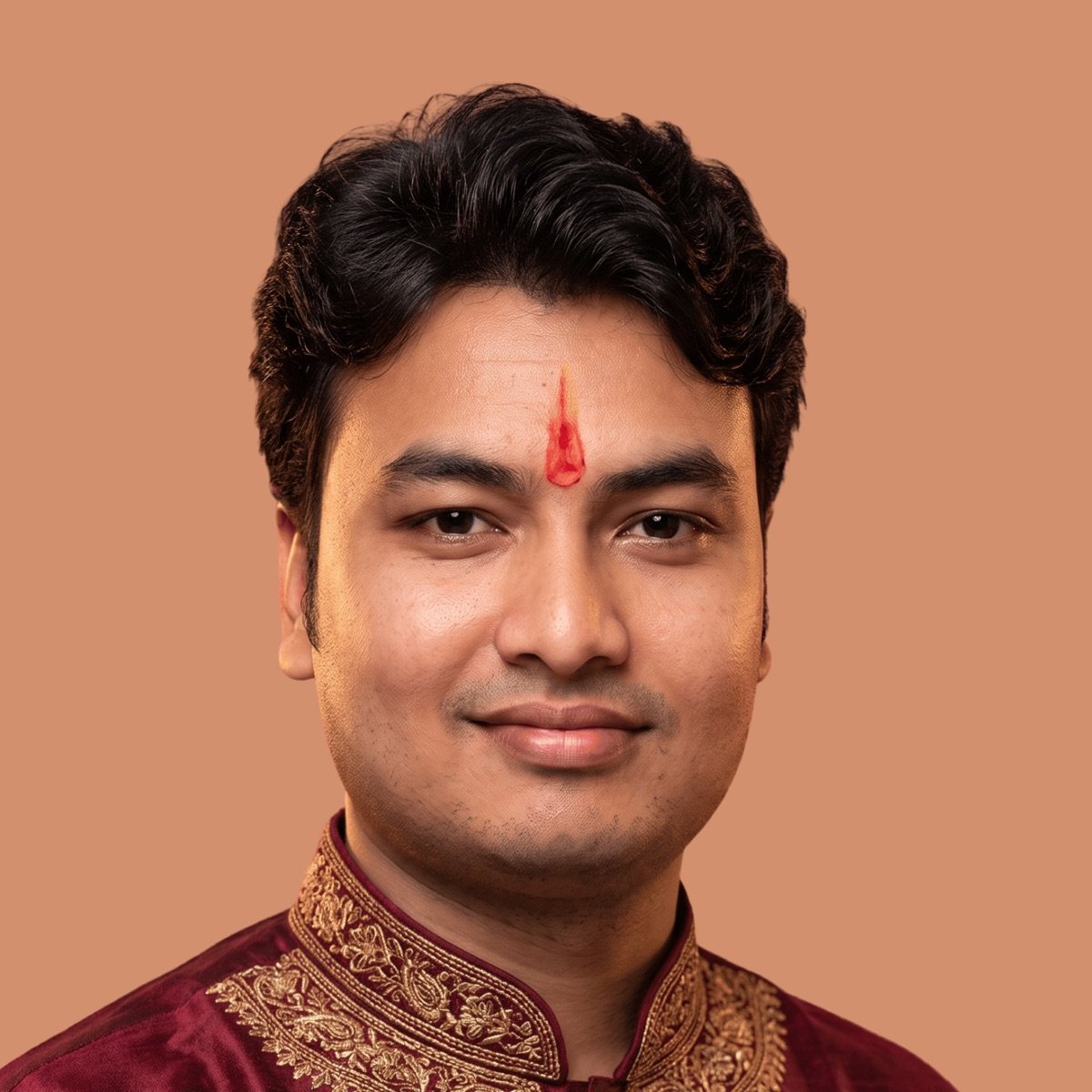
Acharya Brajesh
Vedic Purohit, Andheri, Mumbai. Invited to the USA (2009–11) as a Vedic Pandit by the Maharishi Mahesh Yogi organisation. Every ritual performed per Sanatan Dharma Vedic Darshana — in the Shankaracharya and Vedic paddhati. More about the Acharya →
Have a ceremony in mind?
Describe your requirement, verify your email with a one-time code, and the office will call you to fix the muhurat — anywhere in Mumbai.
Request an Appointment