When a family books a puja, a careful purohit will often ask a question that surprises them: which paddhati do you follow? Paddhati means method — the settled procedure by which a ritual is performed. Two methods shape household worship across India, and both are common in Mumbai homes: the Vedic paddhati and the Shankaracharya paddhati. This article explains both simply and respectfully, and shows how a knowledgeable acharya chooses between them.
One Tradition, Two Well-Worn Paths
It helps to say at once that these are not rival religions. Both methods serve the same deities, recite Sanskrit mantra, and aim at the same reverence. They differ in emphasis: which scriptures they draw on, how they arrange the ritual, and how they present the divine to a householder. Think of two streams that join the same river.
The Vedic Paddhati: Rooted in Shruti
The Vedic paddhati is grounded in shruti — the Vedas, regarded as heard revelation rather than composed literature. For domestic ceremony, its procedure is guided by the Grihya Sutras, the ancient manuals of household rites: the wedding, the upanayan (sacred thread ceremony), offerings at the family fire, and the rest.
Its character follows from its sources. Mantra is central, recited with careful attention to accent and pronunciation. The sacred fire — havan — often anchors the rite. The mood is precise and austere, and the family stands where households have stood for untold generations.
The Shankaracharya Paddhati: Puja Organized for the Householder
The Shankaracharya paddhati belongs to the Smarta current of the tradition, associated with the lineage of Adi Shankaracharya, the great teacher whom the tradition honors for organizing both monastic and household worship. Its best-known contribution is the panchayatana arrangement: worship of five deities together — Shiva, Vishnu, Devi (the Goddess), Surya (the Sun), and Ganesha — with the deity the family holds dearest placed at the center of honor.
This method drew on the later literature of the tradition — the smriti and the puja texts — and is closely associated with the sixteen-fold upachara pattern that most household puja follows today: the seat, the water, the flower, the lamp, the food offering, and the rest, each presented in its proper order. It is worship built for busy households: complete, but organized.
How the Two Methods Differ in Practice
The differences show up in details a family can actually notice:
- Source texts: the Vedic paddhati leans on the Vedas and the Grihya Sutras; the Shankaracharya paddhati draws also on smriti and puja literature.
- Structure: Vedic rites center on mantra and fire; Smarta puja centers on the decorated worship of the deity through the sequence of upacharas (honors).
- Scope: the panchayatana arrangement welcomes several deities into one puja, which suits mixed family devotion.
- Duration: the upachara sequence can be expanded or shortened, so household puja in this method flexes with the time available.
Two Streams, One River
At depth, the two methods converge. Both hold that worship must be performed with correct method and a sincere heart, that mantra and offering are the substance of the rite rather than its decoration, and that the purpose is aligning the family with dharma. The choice between them is not a choice between true and false worship; it is a choice of idiom.
A rite performed by the letter alone is a lamp unlit; a rite performed with understanding illumines the house.
— as tradition teaches
How an Acharya Chooses, and How to Arrange Yours
A trained acharya does not impose one method on every home. He asks about the family sampradaya — the lineage of practice the household inherited: the deities it honors, the priestly line it has known, the customs of its native region. A Griha Pravesh for one family may follow the Vedic paddhati with a full havan; a Satyanarayan Katha for another follows the Smarta pattern; a third household may blend the two without contradiction, as families have long done.
This is where study matters. Practice inherited by rote, unchecked against the texts, can drift over generations; scripture-verified practice keeps a ceremony faithful while respecting the family it serves. Acharya Brajesh, raised in the guru-shishya parampara (teacher lineage), performs rituals in both the Shankaracharya and Vedic paddhati, and asks about the household before fixing the vidhi. Whichever method suits you, the practical steps are the same: state the occasion and your family tradition, agree the duration, and let the acharya prepare the samagri (ritual materials) list.
Speak With an Acharya Before You Book
If you are unsure which paddhati your family follows, that uncertainty is normal — and quickly resolved in a short conversation. Request an appointment with Acharya Brajesh, describe the ceremony you have in mind, and he will suggest the method that fits your household. His training and lineage are described on the about page, and each ritual he performs is listed on the services page. To call directly: +91 98679 90291.
Frequently Asked Questions
What is Shankaracharya paddhati?
What is the difference between Vedic paddhati and Smarta puja vidhi?
Can the two methods be combined in one ceremony?
Which paddhati should a family choose for a Griha Pravesh?
Does the choice of paddhati change the duration of a puja?
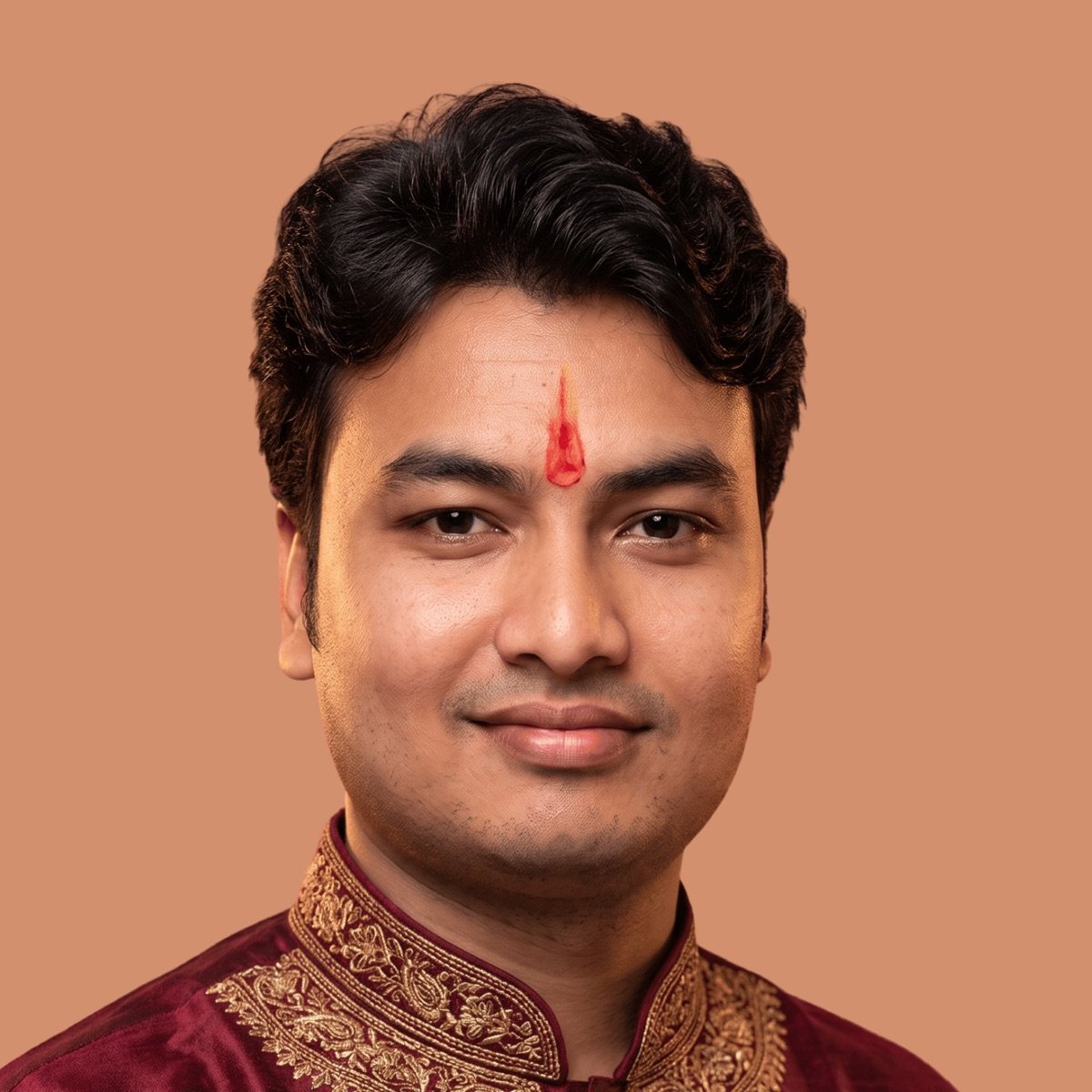
Acharya Brajesh
Vedic Purohit, Andheri, Mumbai. Invited to the USA (2009–11) as a Vedic Pandit by the Maharishi Mahesh Yogi organisation. Every ritual performed per Sanatan Dharma Vedic Darshana — in the Shankaracharya and Vedic paddhati. More about the Acharya →
Have a ceremony in mind?
Describe your requirement, verify your email with a one-time code, and the office will call you to fix the muhurat — anywhere in Mumbai.
Request an Appointment