
Every family carries names it no longer says aloud. Pitru Karma — the rites by which ancestors are honored — exists so those names are kept, not misplaced. In a city where families have moved from village to suburb within a single generation, these rites are often the one thread back. This guide explains tarpan, the annual shraddh, and what a family in Mumbai practically arranges — without fear, and without fuss.
Why Pitru Karma Matters
The shastras speak of a debt each of us carries toward those whose lives made ours possible — parents, grandparents, and the long line behind them. Pitru Karma is how that debt is acknowledged: not with anxiety, but with gratitude given a form.
This is worth saying plainly, because some families arrive carrying worry. A household that performs these rites is not appeasing anything. It is remembering, formally and gratefully, the people who carried it here. There is dignity in the ordering, too: the tradition does not ask the grieving to improvise. It gives remembrance a shape, so that on the day the family only has to be present.
Tarpan: The Offering of Water
Tarpan means satisfaction — water offered with prayers so that the ancestors are content. It is among the simplest rites in the entire tradition: water, sesame, a steady voice, and the names of those being remembered. It is kept on Amavasya, the new moon, and with particular care during Pitru Paksha, the fortnight each year set aside for ancestors.
Because it asks so little, tarpan is the rite most easily kept across years and decades — a few minutes of remembrance on the days the almanac marks. And where a family has never seen the tarpan vidhi performed, the acharya demonstrates it once, slowly, and the family continues with confidence thereafter.
The Annual Shraddh, Kept by Tithi
Shraddh — a word that carries both faith and the annual rite itself — is performed each year on the tithi, the lunar day of the traditional almanac, on which a parent or elder passed. The karta, the family member who performs the rite, offers water and food while the purohit chants the prescribed mantras. The rite says what families struggle to say in ordinary words: you are not forgotten; your place in this line is kept.
If the exact tithi is uncertain — which happens when families relocate — the recorded date and the panchang together settle it. It is a question to raise while booking, never a reason to skip the year. Families also ask whether the rite must fall within Pitru Paksha: the annual shraddh belongs to the tithi itself, while Pitru Paksha is the season when all ancestors are honored together. The acharya maps the family's dates against the almanac each year.
What a Family Practically Arranges
Nothing elaborate is required. Households in city flats arrange the same short list: a clean corner or balcony, a seat for the karta, the puja samagri — the ritual materials — per a list shared at booking, and a simple satvik meal — pure, lightly prepared food — afterward.
The rite is usually kept in the morning, and in its shorter forms it fits comfortably within a weekday. Many families complete it before the working day begins. Neighbors need not be invited; the rite is for the family and the ancestors, and some keep it entirely private. If the elders remember how it was done in the village, let them sit close — their presence is itself part of the transmission. What matters is not the scale of the setup but the attention of the family.
A family is a river, and the rites are how the river honors its own source.
— as the shastras remind us
Time, Setup, and the Breadth of Worship
How long a shraddh takes depends on the breadth the family chooses, and the tradition allows honest flexibility. A rite with the five-fold Panchopachara offering — gandha (sandal paste), pushpa (flowers), dhupa (incense), deepa (lamp) and naivedya (food) — fits a weekday morning. Fuller forms, up to the complete sixteen-fold Shodashopachara worship, are chosen when the family wants the entire depth, for instance on a first anniversary.
One principle does not flex: the core mantras and offerings are never omitted. Only the breadth of the surrounding worship varies, and the family makes that choice with the acharya in advance, calmly, at booking.
Arranging a Shraddh in Mumbai, Gently
If a tarpan or shraddh is due in your family and you are looking for a shraddh vidhi pandit in Mumbai, request an appointment with Acharya Brajesh through the booking page. He performs Pitru Karma across the city — from a flat in Andheri to a house by the sea in Juhu — strictly according to the shastras and in the Shankaracharya and Vedic paddhati, and he guides the family through each step without hurry. You can read about his training on the about page, or see the full range of rites on the services page. Call +91 98679 90291.
Frequently Asked Questions
What is pitru karma in simple words?
Can shraddh be performed at home in Mumbai?
What if we do not know the exact tithi of an elder's passing?
Who should perform the shraddh in the family?
How long does a shraddh ceremony take?
What is the dakshina for pitru karma?
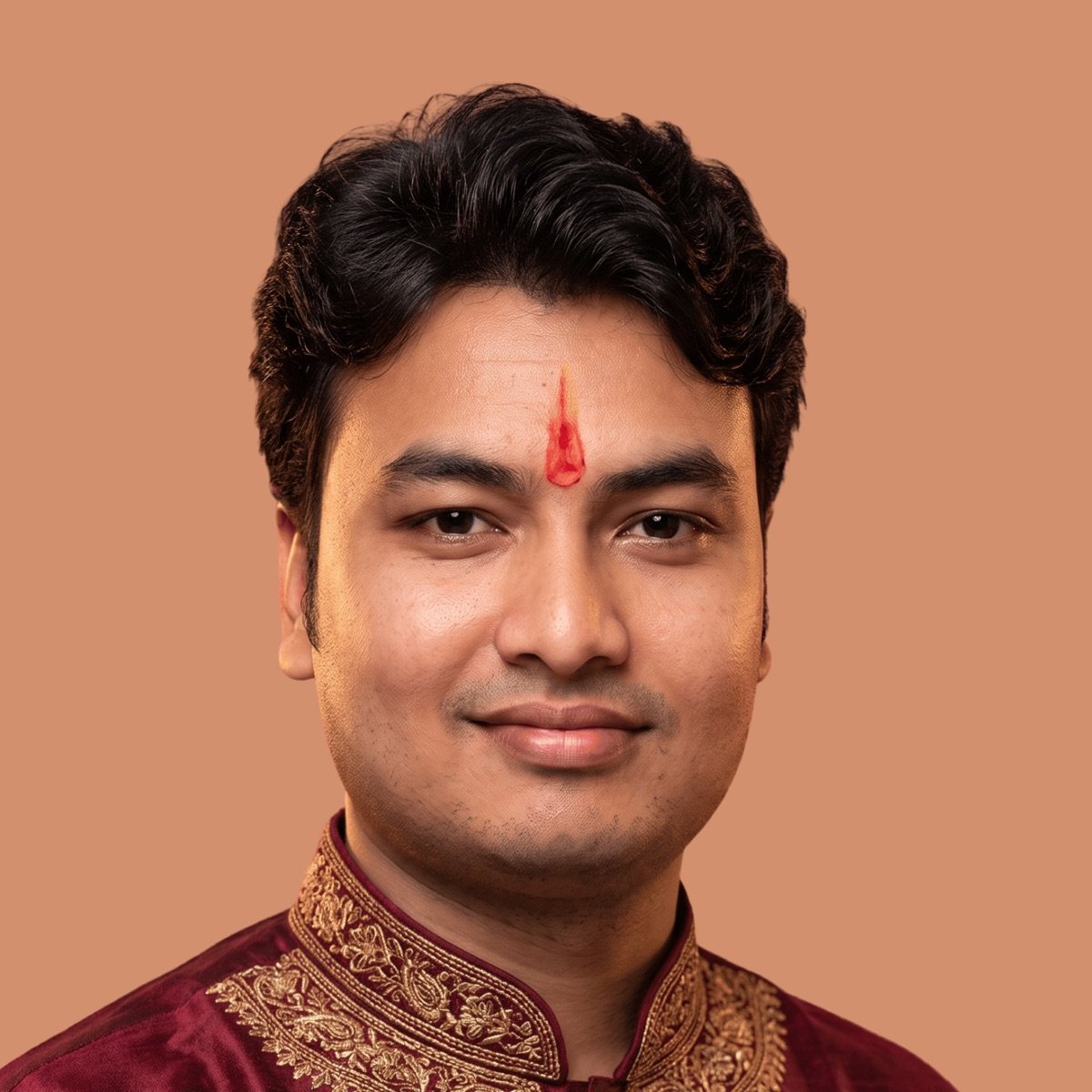
Acharya Brajesh
Vedic Purohit, Andheri, Mumbai. Invited to the USA (2009–11) as a Vedic Pandit by the Maharishi Mahesh Yogi organisation. Every ritual performed per Sanatan Dharma Vedic Darshana — in the Shankaracharya and Vedic paddhati. More about the Acharya →
Have a ceremony in mind?
Describe your requirement, verify your email with a one-time code, and the office will call you to fix the muhurat — anywhere in Mumbai.
Request an Appointment