
Among the ceremonies families in Mumbai ask for most, Rudrabhishek holds a special place. It is the ceremonial bathing of the Shiva lingam with sacred substances while the Rudri path — verses of praise to Rudra, the fierce-and-kind form of Shiva — is recited aloud. The ritual is ancient, complete, and surprisingly practical to arrange at home. This article explains what it is, how it is performed, and when families choose to keep it.
What Rudrabhishek Actually Is
Abhishek means a ceremonial bath; Rudra is the Vedic name by which the tradition addresses Shiva. In a Rudrabhishek, the lingam — the sacred emblem of Shiva kept in a home shrine or on a pedestal — is bathed, verse by verse, while the prescribed mantras are chanted. The recitation used for this purpose is often called the Rudri, drawn from the Rudra chapters of the Yajurveda. Bathing and recitation move together: each pour of water or panchamrit follows the flow of the mantra, so the ritual never becomes a matter of mere pouring.
The Abhishek Dravyas: Panchamrit and Water
The substances used for the bath are called dravyas. At the center is panchamrit — the five nectars: milk, curd, ghee, honey, and sugar, blended and offered over the lingam. Clean water follows, often in several rounds, so the rite closes with the lingam cool and fresh. Every dravya is offered with its own mantra; nothing is poured casually. Flowers and bilva leaves may be placed after the bath, and in many households the panchamrit that bathed the lingam is later shared as prasad. The dravya list is confirmed with the acharya when the date is fixed, since families keep different customary additions.
The Shape of a Traditional Rudri Path
A traditional arrangement at home moves through clear stages:
- Sankalpa — the family states its intention: the names, the purpose, the date.
- Kalash sthapana — the sacred pot is established and invoked, and the space is prepared.
- Abhishek — the bathing of the lingam with panchamrit and water, mantra by mantra.
- Rudri path — the recitation of the Rudra chapters, arranged in rounds so the length can suit the household.
- Aarti and prasad — the flame is waved, the food offering is made, and prasad is shared.
Between the stages, the acharya keeps the family involved: they offer water, hold flowers, and answer the questions of the sankalpa. A Rudrabhishek is not a performance watched from a sofa; it is a rite the household enters into.
The Right Days: Mondays, Shravan, and Pradosh
Families most often book Rudrabhishek on Mondays, the day devoted to Shiva. The month of Shravan is considered especially favorable, and many households keep a Rudrabhishek each year during that month. Pradosh — the auspicious evening window that arrives twice each lunar month — is another favored time. None of this is rigid: the rite can be performed whenever a family has a sincere purpose, and the acharya will confirm a suitable muhurat (auspicious time) when the date is fixed.
Arranging It in Your Own Home
No temple booking is required. In flats across Andheri and Juhu, the setup usually needs only a corner: a chowki or table for the lingam and kalash, a water pot, and space for the family to sit. The purohit brings the prepared samagri (materials) and guides the household through its part. Duration is flexible — a compact Rudrabhishek fits a weekday evening, while the fuller observance with extended recitation is planned for a morning or a weekend.
Why Families Book It: Benefits, Understood Honestly
Why do families return to this ritual year after year? The tradition answers plainly: it is worship of Shiva, and worship is its own purpose. Households describe what the shastras would lead one to expect — a home that feels steadier, a mind that settles during the long recitation, a family that has given an afternoon to something together. What a Rudrabhishek does not offer is a guaranteed result. The shastras frame worship as duty and devotion, never as a transaction, and a family that asks what the ritual will bring deserves an honest answer at the start. Those who receive one tend to keep the ritual for years, which is perhaps the truest benefit of all.
Worship offered with a steady heart is never wasted, whatever the world returns for it.
— as the shastras remind us
Book a Rudrabhishek for Your Home
If you are considering Rudrabhishek at home — on a Monday, in Shravan, or for a purpose of your own — you can request an appointment with Acharya Brajesh. He performs the full vidhi strictly per the shastras and will tell you plainly what the household needs to prepare. The complete list of ceremonies is on the services page, and further guides are on the blog. For dates and details, call +91 98679 90291.
Frequently Asked Questions
What is Rudrabhishek puja?
Can Rudrabhishek be performed at home?
Which day is best for Rudrabhishek?
How long does a Rudrabhishek take?
What is the dakshina for a Rudrabhishek?
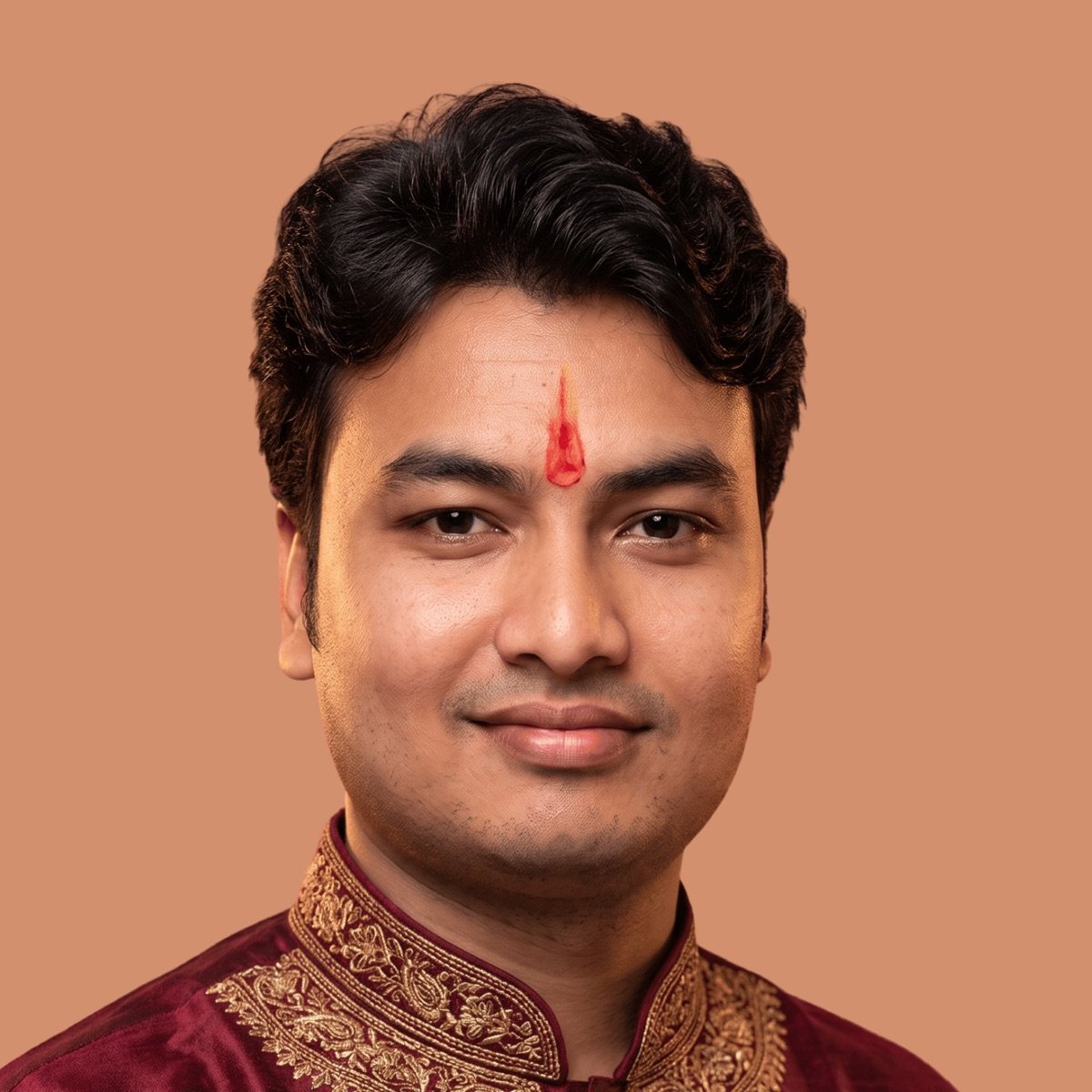
Acharya Brajesh
Vedic Purohit, Andheri, Mumbai. Invited to the USA (2009–11) as a Vedic Pandit by the Maharishi Mahesh Yogi organisation. Every ritual performed per Sanatan Dharma Vedic Darshana — in the Shankaracharya and Vedic paddhati. More about the Acharya →
Have a ceremony in mind?
Describe your requirement, verify your email with a one-time code, and the office will call you to fix the muhurat — anywhere in Mumbai.
Request an Appointment