
After years of home pujas, hall ceremonies and office pujas, a pattern emerges: families ask the same honest questions before they book anyone. They should ask. A ritual is a matter of trust, and trust begins with plain answers. Here are twenty questions people put to a Vedic purohit — questions and answers, exactly as Acharya Brajesh gives them.
Booking and Time
The practicalities come first.
How do I book a pandit in Mumbai?
Request an appointment through the booking page. You confirm the ritual, the date and the location; the muhurat, the samagri list and the timings are then settled directly, well before the day.
How far in advance should we book?
As early as you can. Auspicious dates fill quickly around wedding season, Ganesh Chaturthi and Diwali. A few weeks is comfortable for most home pujas; a month or more for large ceremonies.
Which areas do you serve?
All of Mumbai, with particular experience in Andheri West and East — Lokhandwala, Versova, Four Bungalows, Yari Road, Chakala, Saki Naka — and in Juhu and Bandra. If your home lies elsewhere in the city, simply ask.
Can a puja happen early, before the workday?
Yes. Many daily and monthly rituals are kept in the early morning, and the tradition's shorter forms exist precisely so a working family can keep them properly. Timing is part of the planning.
Muhurat and Dates
Every family has questions about auspicious timing.
Do you choose the muhurat, or do we?
The acharya prepares it from the panchang — the traditional almanac — and shares the workable options with you. The choice belongs to the family; the precision belongs to the training.
Is a puja possible only on festival dates?
No. Most rituals — Griha Pravesh, Rudrabhishek, Satyanarayan Katha, vehicle and office pujas — are kept on a day that suits the family. Some rites, such as the annual shraddh, are tied to a specific tithi, the lunar day of remembrance.
What if our hall booking clashes with the muhurat?
It happens often, and it is solvable. Many rituals carry a permitted window rather than a single minute. Raise the clash at booking and the acharya will find the correct solution within the shastras.
Why do our festival dates differ from our neighbors'?
Regional and family traditions calculate some observances differently, and both can be correct within the tradition. What matters is following your family's paddhati — its established method — consistently.
Samagri and Setup
What to have ready, and how much space it takes.
Do you bring the puja samagri?
A complete list is shared in advance, and what can be supplied is agreed at booking. The purpose of the list is simple: nobody should be driving to a shop in the middle of a sacred rite.
What should we prepare at home beforehand?
A clean space, an asana — the seat for the ritual — and flowers and fruit per the list. The acharya arrives early; the family should be settled before the sankalp, the formal statement of intention, begins.
Our flat is small. Is that a problem?
No. A puja needs a corner, not a hall. Most homes are entirely adequate; the ritual dignifies whatever space it is given.
Can pujas be done in offices or society halls?
Yes. New-office pujas and vehicle pujas are regular work, and society halls are often the practical choice for larger gatherings such as a Satyanarayan Katha or a group Rudrabhishek.
A ritual understood is a ritual lived; keep asking until it is clear.
— as the shastras remind us
Costs and Dakshina
The questions people save for last, asked here first.
How much does a pandit cost in Mumbai?
Dakshina is discussed personally; it depends on the ritual's length and samagri. It is settled before the day, never negotiated at your doorstep.
Is there a fixed rate card?
No — and a card would flatten what the tradition treats individually. What is fixed is the process: everything is discussed and agreed openly before the ritual begins.
Do we arrange anything extra for travel or materials?
Whatever applies is stated at booking, so the family knows the complete picture in advance. Surprises belong to no part of a sacred appointment.
Can we arrange a larger ritual for a group?
Yes. Rudrabhishek, Satyanarayan Katha and other group ceremonies are regular work. Numbers, venue and samagri are planned together so the rite stays disciplined at any size.
Family Situations
Finally, the rituals that mark a family's own milestones.
We just bought a new home. What do we need?
Griha Pravesh, the first-entry ceremony, and Vastu Shanti, the rite of peace for the dwelling, are the two most requested. Which to perform, and in what breadth, follows your home's situation and history.
We are opening a new office or buying a new car.
Both carry their own pujas. A new-office puja is usually kept before work begins; a vehicle puja is short and often performed in the building's parking area.
Which sanskaras will our children need?
Namkaran, the naming; Mundan, the first head-shaving; Upanayan, the sacred thread ceremony, where the family keeps it. Each is performed strictly per the shastras, in your family's own paddhati.
Our family has drifted from tradition. Will it be explained?
Fully, and without a hint of judgment. Every significant step is explained in plain language as it happens — a discipline formed during two years of performing and teaching Vedic ritual in the United States, described on the about page. The tradition welcomes returns; that is what it is for.
The Twenty-First Question Is Yours
Ask it through the booking page, where you can request an appointment with Acharya Brajesh for any ritual across the city — from a five-minute Panchopachara offering to the full five-hour Shodashopachara worship, every ceremony performed strictly in the Shankaracharya and Vedic paddhati. Call +91 98679 90291, or browse the services page to see what your family's year may hold.
Frequently Asked Questions
Is this article a substitute for asking my own questions?
How do I book Acharya Brajesh for a puja?
Do you serve areas outside Andheri, Juhu and Bandra?
What if I am embarrassed to ask basic questions?
What is the dakshina for a puja?
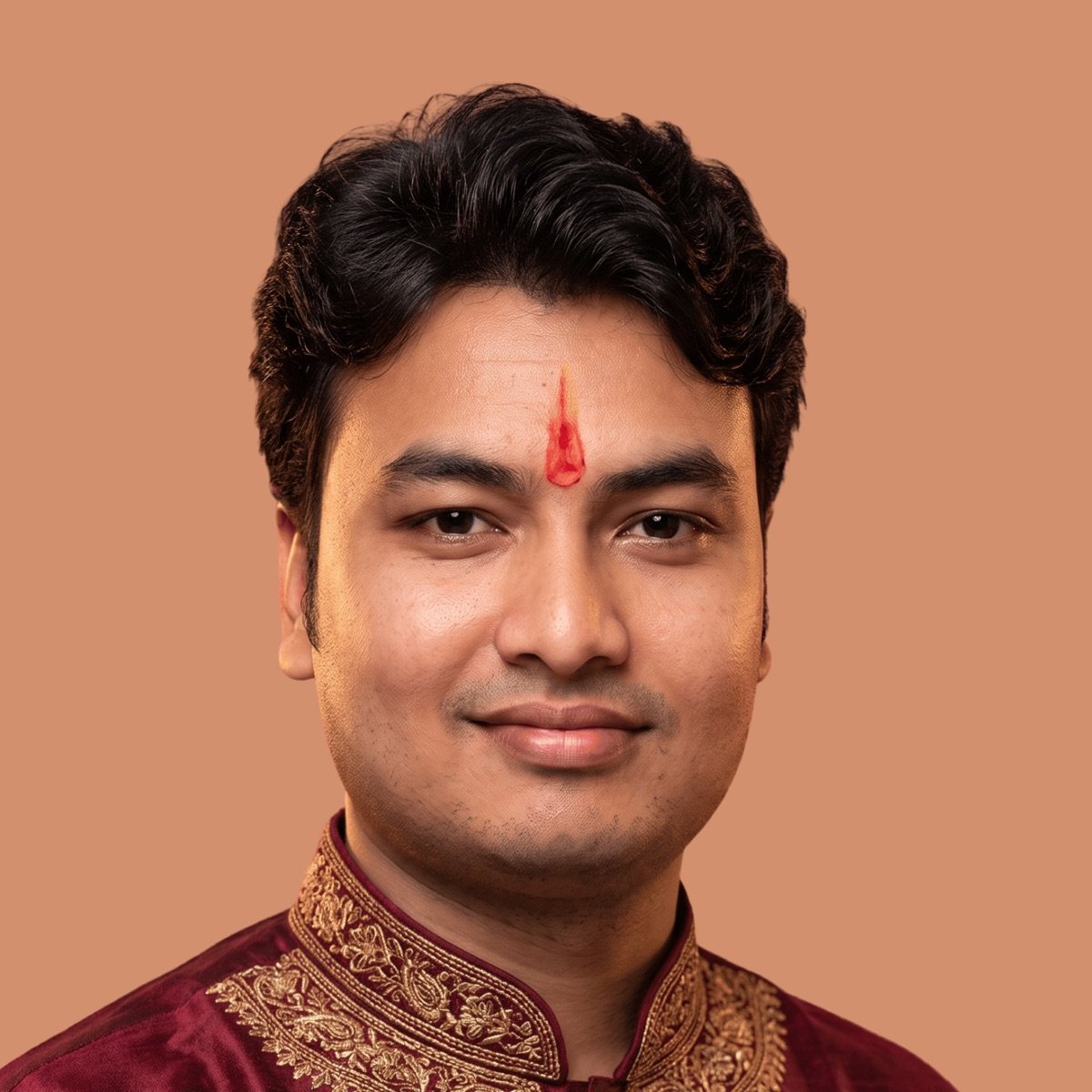
Acharya Brajesh
Vedic Purohit, Andheri, Mumbai. Invited to the USA (2009–11) as a Vedic Pandit by the Maharishi Mahesh Yogi organisation. Every ritual performed per Sanatan Dharma Vedic Darshana — in the Shankaracharya and Vedic paddhati. More about the Acharya →
Have a ceremony in mind?
Describe your requirement, verify your email with a one-time code, and the office will call you to fix the muhurat — anywhere in Mumbai.
Request an Appointment