
A Mumbai wedding runs on timetables — the caterer, the photographer, the banquet hall, the band. Yet the ceremony at the heart of it all, the vivah sanskar, the Vedic marriage sacrament, follows an order older than any event schedule. When a family understands that order, it stops watching the clock and starts hearing the vows.
The Shape of a Vivah Sanskar
The vivah sanskar vidhi — the prescribed method of the marriage rite — moves through a fixed sequence preserved by the shastras, the foundational scriptures of Sanatan Dharma:
- Ganapati puja — worship of Lord Ganesha, remover of obstacles, before any sacred work begins.
- Var satkaar — the ceremonial welcome of the groom by the bride's family.
- Madhuparka — an offering of honey, curd and milk, honoring the groom as a revered guest.
- Kanyadaan — the giving of the bride.
- Saptapadi — the seven steps taken together.
- The pheras — circling the sacred fire.
- Mangalsutra and sindoor — the enduring marks of marriage.
Every element carries a purpose. None of it is decoration.
Welcoming the Groom: Var Satkaar and Madhuparka
Before any vow is spoken, the groom is received as an honored guest. In the var satkaar, the bride's family welcomes him at the entrance to the mandap, the raised ceremonial canopy. He is then offered the madhuparka, a sweet mixture of honey, curd and milk — an ancient gesture of respect between households.
The meaning is quiet and practical: two families are meeting, and the meeting itself is treated as sacred, not as a formality before the real ceremony begins.
Kanyadaan: A Giving That Binds, Not a Losing
Kanyadaan, the offering of the daughter, is often the most emotional moment of the day. The shastras treat it as an act of trust — one family entrusting its daughter to another, witnessed by fire and by both lineages. A disciplined acharya keeps this moment unhurried. Some moments deserve their silence.
Saptapadi Meaning: What the Seven Steps Actually Say
Saptapadi, the seven steps, is the heart of the marriage and, by tradition, the point at which the union stands complete. The couple walks seven steps together, and with each step a shared intention is voiced. In plain language, the steps speak of:
- Nourishment — may we sustain each other.
- Strength — may we grow in vigor together.
- Prosperity — may our efforts bear fruit.
- Harmony — may we find happiness in one another.
- Family — may we care for all entrusted to us.
- The seasons of life — may we stand together through all of them.
- Friendship — may we remain true companions, loyal to the end.
This is the saptapadi meaning at its simplest: marriage as a walk rather than a leap. Seven small steps, spoken as a vow, become the habit of a lifetime.
The householder's path is called the root of them all — and a root grows one step at a time.
— as the shastras remind us
Mangalsutra, Sindoor and the Pheras Around Fire
After the steps, the groom ties the mangalsutra, the sacred necklace, around the bride's neck, and sindoor — vermilion — is placed at her hair parting. These are not ornaments. They are daily reminders of a vow taken before fire, the kind of promise a couple carries into an ordinary Tuesday, which is where most marriages are actually lived.
Around the whole ceremony stands agni, the sacred fire, witness of every Vedic marriage. In the pheras the couple circles the flame as the mantras are chanted, letting the same light that has seen countless unions see theirs. Elders often join the chanting, and a good acharya lets the joy breathe without letting the sequence dissolve.
Staying on Schedule Without Cutting Scripture
Here discipline matters. A banquet hall has its own clock, and many weddings lose their muhurat — the auspicious window fixed by the panchang, the traditional almanac — to an overrunning ceremony. A trained acharya solves this from within the tradition itself, drawing on the lineage training described on the about page.
The worship surrounding the core rites can be performed in measured breadth. Where time is tight, the Panchopachara form — five offerings: gandha (sandal paste), pushpa (flowers), dhupa (incense), deepa (lamp) and naivedya (food) — keeps the ritual complete in minutes. The Dashopachara form, with ten offerings, suits a fuller schedule, and the complete sixteen-fold Shodashopachara worship is reserved for occasions that deserve the entire depth. The vows themselves are never trimmed; only the breadth of the surrounding worship flexes, and that choice is made with the family well in advance.
Plan Your Wedding With an Acharya Who Knows the Order
If you are looking for a Vedic wedding pandit in Mumbai — for Andheri, Juhu, Bandra or anywhere in the city — request an appointment with Acharya Brajesh through the booking page. Every ritual he performs follows Sanatan Dharma Vedic Darshana, strictly according to the shastras, in the Shankaracharya and Vedic paddhati, the traditional methods of worship. Call +91 98679 90291 to discuss your date and the sequence your family will actually experience, or see the full range of ceremonies on the services page.
Frequently Asked Questions
How long does a full Vedic wedding ceremony take?
Do you perform weddings only in Mumbai?
What does the family need to arrange for the ceremony?
Can the ceremony be shortened if the muhurat is tight?
What is the dakshina for a wedding?
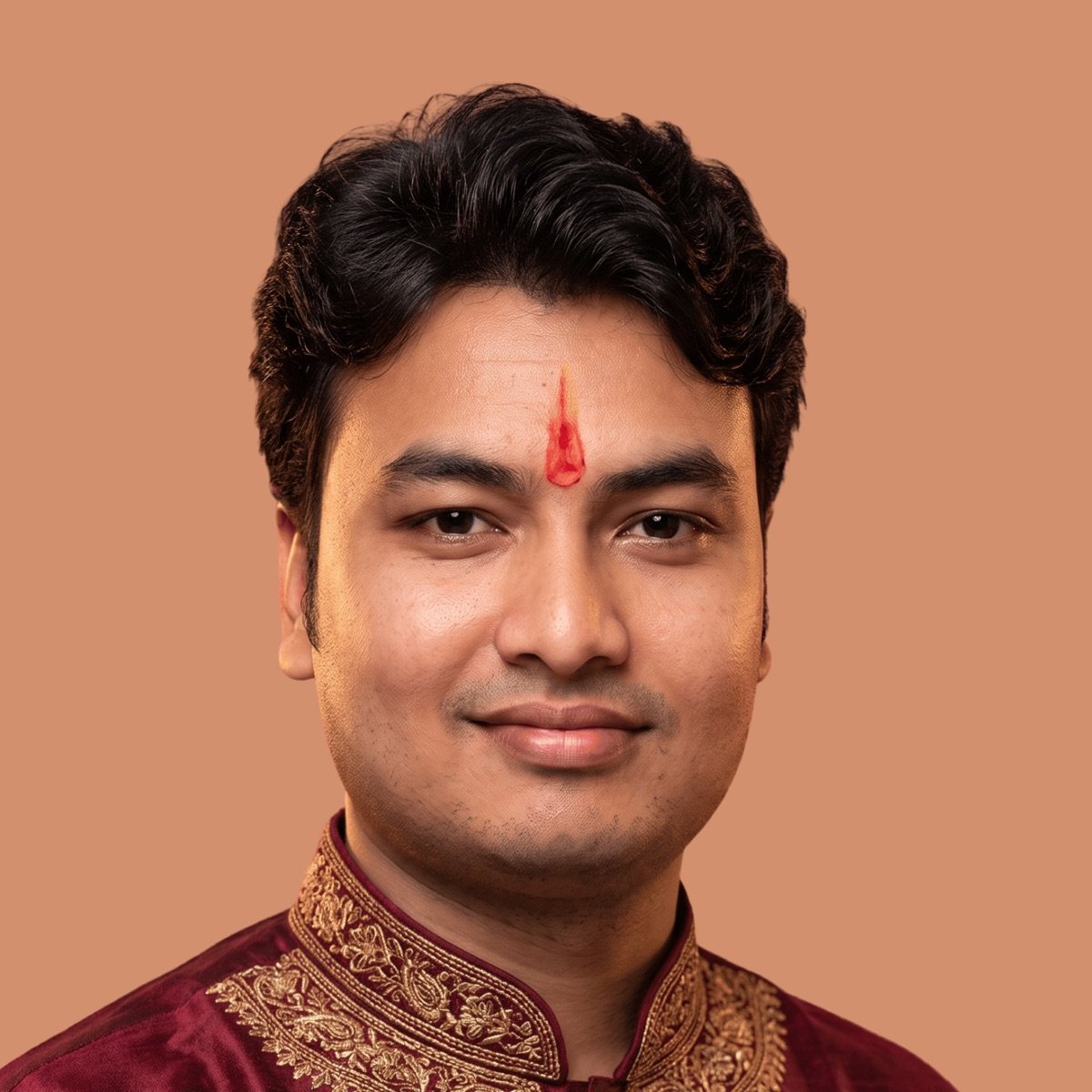
Acharya Brajesh
Vedic Purohit, Andheri, Mumbai. Invited to the USA (2009–11) as a Vedic Pandit by the Maharishi Mahesh Yogi organisation. Every ritual performed per Sanatan Dharma Vedic Darshana — in the Shankaracharya and Vedic paddhati. More about the Acharya →
Have a ceremony in mind?
Describe your requirement, verify your email with a one-time code, and the office will call you to fix the muhurat — anywhere in Mumbai.
Request an Appointment